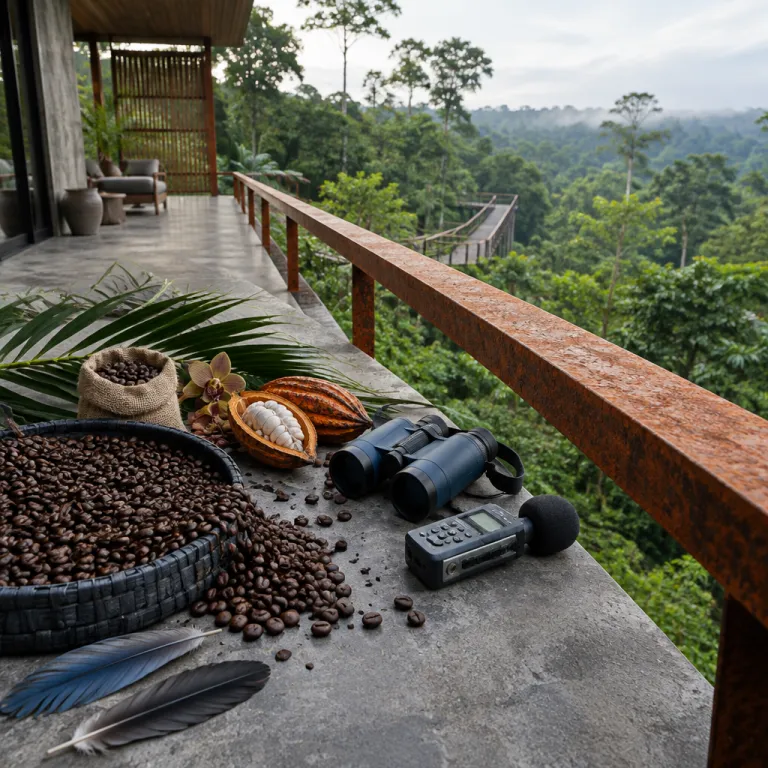
Waking up wild: the 5 AM start at a Panama wildlife lodge
The alarm at a Panama wildlife lodge luxury stay is rarely your phone. At the right lodge in Panama, the first sound is the deep roar of howler monkeys rolling across the forest canopy, a reminder that guests are sleeping inside one of Central America’s richest wildlife corridors. Families who usually negotiate late wake ups at a city resort suddenly find children sitting up before sunrise, listening for the next call.
In this kind of eco focused lodge, staff set a thermos of coffee and hot chocolate outside each private cabin around 5 AM. Parents step onto the deck, still half in the dark, and watch the forest shift from silhouettes to layered greens while the canopy begins to move with birds, sloths, and the occasional kinkajou heading home. This is where panama wildlife lodge luxury feels different from a traditional island resort ; the spectacle is not staged, and the forest writes the schedule.
Many of the most rewarding lodges in Panama sit where jungle meets water, whether that is a calm bay in Bocas del Toro or the mangrove edged inlets of the Gulf of Chiriquí. From these eco lodges, the morning air carries both salt and leaf mold, and the line between land and sea wildlife blurs quickly. For families used to accommodation in Panama City high rises, the shift to a small adventure lodge with only a handful of lodges in Panama around a central deck feels intimate, almost like a private island camp designed for nature first.
Dawn birding under the canopy: from Pipeline Road to canopy tower views
By first light, the serious birding begins, and this is where Panama quietly outperforms many neighbors, including Costa Rica. Pipeline Road near the Canal is one of the world’s premier birding corridors, and experienced guides here can help guests spot well over 300 species during peak birding months when the forest is dry and visibility is high. For families staying at a canopy lodge near this area, the pre breakfast walk becomes the anchor of the whole panama wildlife lodge luxury experience.
Guides lead small groups along forest trails or up to a canopy tower, where children learn to use binoculars properly and parents finally understand the difference between a motmot and a manakin. The best eco lodges keep the pace gentle, stopping often to identify calls, track toucans across the canopy, and point out army ant swarms that attract mixed flocks of insect eating birds. On a good morning, guests might log trogons, tanagers, and raptors before the sun fully clears the trees, and the shared list becomes a family memory that outlasts any city shopping trip.
Some lodges in Panama base themselves closer to the Caribbean, using Bocas del Toro as a launch point for quieter islands and mangrove channels. From these bases, birding shifts to a blend of forest edge and bay habitats, with herons, kingfishers, and frigatebirds joining the cast. If you are sailing through the San Blas archipelago, a region often described as a natural private island chain, pairing that cruise with a stay at a wildlife focused lodge turns a beautiful trip into a deeper eco adventure ; a detailed guide to sailing the San Blas archipelago helps you plan that combination with precision.
Breakfast with howler monkeys: family friendly luxury in the forest
By the time families return from the dawn walk, the howler monkey chorus has usually shifted deeper into the forest, and the lodge kitchen comes alive. At a well run eco lodge, breakfast is not a rushed buffet but a seated meal where children can keep binoculars on the table while parents linger over local coffee. Plates lean toward tropical fruit, fresh baked bread, and eggs cooked to order, and the open air dining room frames the canopy like a moving painting.
For Premium Family travelers, this is where panama wildlife lodge luxury proves itself ; the service is polished, but the atmosphere stays relaxed enough that a child can quietly point out a sloth without feeling they are interrupting. Staff at these lodges are used to multi generational groups, and they pace the morning so that younger guests can rest between activities while older children join a guide for a short eco adventure along nearby trails. The best properties balance privacy and connection, with each private cabin or suite tucked into greenery but only a short walk from the main deck.
In regions like Valle de Antón, where a forested crater shelters both cloud forest and small farms, lodges in Panama often weave local culture into the wildlife narrative. Families might visit a nearby market after breakfast, then return to the lodge for a midmorning swim before an afternoon walk focused on frogs and orchids. For those considering all inclusive style stays, a curated overview of Panama vacation all inclusive escapes to hidden coastal gems can help you compare which accommodation in Panama offers the right mix of guided nature time and downtime by the pool.
From forest trails to tranquil bays: marine wildlife and private island mornings
Not every wildlife focused morning in Panama unfolds under dense canopy ; some of the most memorable begin on a boat gliding through a tranquil bay. Along the Pacific, especially in the Gulf of Chiriquí, small island resorts and eco lodges use the early hours for marine encounters before the sun grows strong. During humpback whale season, families staying on or near a private island often head out just after breakfast, scanning calm water for blows and tail slaps.
On the Caribbean side, Bocas del Toro and the wider Bocas del archipelago offer a different rhythm, with mangrove channels, coral gardens, and quiet coves replacing the Pacific’s open swells. Here, panama wildlife lodge luxury might mean waking up in an overwater cabin, watching rays glide below, then paddling a kayak along the forested shore while howler monkeys call from the trees. Properties like Tranquilo Bay in this region specialize in blending birding, snorkeling, and family friendly guiding, turning a simple bay crossing into a layered eco adventure that works for guests of many ages.
Farther west, Isla Palenque in the Gulf of Chiriquí shows how a carefully managed island resort can feel both refined and wild, with forest backed beaches and guided walks that start right from the sand. A detailed feature on Panama’s quieter Pacific coast, where luxury arrives by boat explains why this region suits travelers who want wildlife without crowds. For Premium Family travelers, these private island style lodges in Panama offer the rare combination of safe swimming, serious wildlife, and enough comfort that grandparents are as happy as teenagers.
Planning your wildlife calendar: when panama wildlife lodge luxury peaks
Choosing the right month matters as much as choosing the right lodge, because Panama’s wildlife calendar shapes what your mornings will look like. On the Pacific, humpback whales gather in warm waters from mid year into the final quarter, with mothers and calves often seen in the Gulf of Chiriquí and around the Pearl Islands. Sea turtle nesting overlaps this period on several Pacific beaches, creating a rare window when a single trip can include both whale watching by day and turtle patrols by night.
Birding peaks during the drier months, especially along Pipeline Road and other lowland forest corridors near Panama City, when trails are more comfortable and canopy views are clearer. Families focused on birds might prioritize a canopy lodge or a property with access to a canopy tower, then add a few nights on an island or private peninsula for marine wildlife. For those balancing school calendars, this means deciding whether whales and turtles or peak birding and easier hiking matter more, and planning accommodation in Panama around that choice.
For Premium Family travelers, the sweet spot often lies in choosing one forest based eco lodge and one island resort, then letting guides handle the details of each eco adventure. Panama City works best as a short stop at the beginning or end, a place to adjust to the time zone and enjoy a final dinner before flying home. When you are ready to move from research to reservations, using a curated platform like MyPanamaStay — a kind of informed “Panama click” that filters only high quality lodges in Panama — helps ensure that your chosen property treats wildlife as the main event, not a marketing line.
FAQ
Is a wildlife focused lodge in Panama suitable for younger children?
Most wildlife oriented lodges in Panama are best for children aged eight and above, because dawn birding walks, boat outings, and forest trails require patience and basic stamina. Some properties accept younger guests but may limit certain activities for safety reasons. Families with very young children often split time between a more flexible resort and a dedicated eco lodge to keep everyone comfortable.
How does a wildlife morning at a Panama lodge differ from a regular resort stay?
At a wildlife focused lodge, the day starts early with howler monkeys, bird calls, and guided walks rather than late breakfasts and poolside music. Activities are timed around animal behavior and light conditions, so guests might be on the trail or water before sunrise. Luxury here means expert guiding, small groups, and access to pristine habitats rather than only spa menus and city style amenities.
What should we pack for dawn birding and forest walks in Panama?
For dawn birding, bring lightweight long sleeves, quick drying trousers, and closed shoes with good grip, plus a light rain jacket and a hat. Binoculars are essential, though many lodges provide them, and a small daypack for water and snacks keeps children comfortable. Neutral colors work best in the forest, and families should avoid strong perfumes or bright clothing that can distract wildlife.
Can we combine a Panama wildlife lodge with time in Panama City or on the beach?
Combining a wildlife lodge with a short stay in Panama City and a few nights on the coast works very well for Premium Family travelers. Many itineraries start with one or two nights in the city, continue with three or four nights at a forest or island lodge, then finish with a relaxed beach resort. This structure balances early wildlife mornings with downtime, giving children both adventure and rest.
How far in advance should we book a luxury wildlife lodge in Panama?
For peak wildlife seasons, especially during humpback whale and sea turtle nesting periods, booking several months in advance is wise. Smaller eco lodges and private island properties have limited rooms, and family suites often sell out first. Shoulder seasons offer more flexibility, but travelers seeking specific guides or room types should still plan ahead.