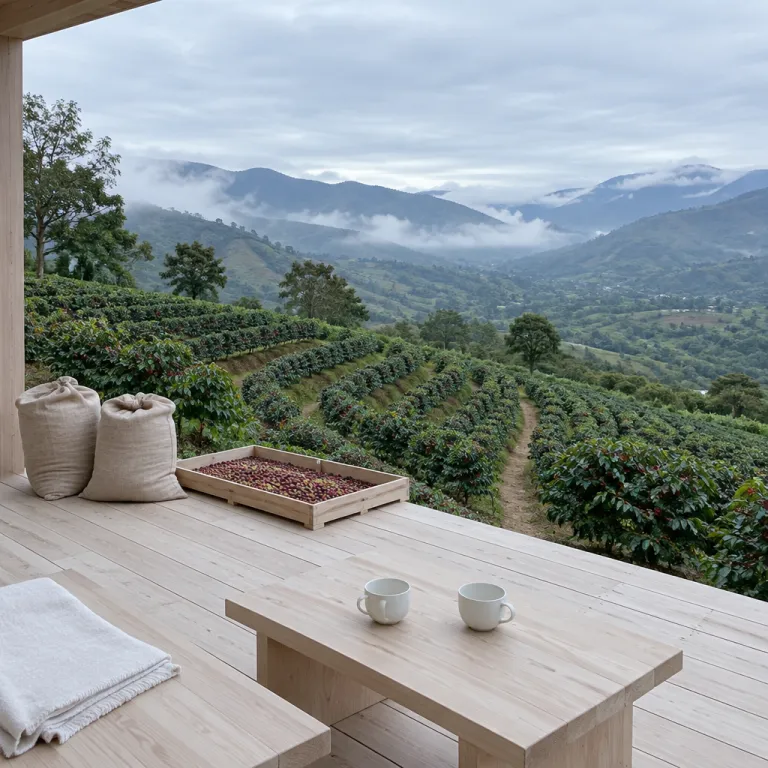
Why October in Boquete feels made for coffee-obsessed travelers
October in Boquete, Panama, coincides with the first serious wave of the coffee harvest, which typically runs from late September through January in the Chiriquí highlands. Cool mornings at 1,200 meters give way to soft clouds that settle over every coffee farm and estate in the valley. For a solo traveler planning a Boquete coffee farm stay in Panama, this is when the region feels most alive.
Pickers move through the farm rows with practiced rhythm, and you wake to the sound of cherries dropping into baskets rather than traffic or nightlife. Staying on a working coffee estate during harvest means you watch coffee cultivation and coffee production unfold in real time, from the first sort of ripe fruit to the last drying bed. It is the best moment to understand why this region produces some of the best coffee on earth, including record-breaking Geisha coffee lots that have reached more than 1,000 USD per pound at auction in recent years.
The Coffee Circuit tourism initiative in Chiriquí opens a curated set of coffee farms and coffee plantations between 1,000 and 2,100 meters for guided visits. The program is coordinated through the Chiriquí tourism board and local producers; current participating estates and contact details are listed on the official regional tourism website and at the Boquete visitor center in town. That means you can sleep at one finca, then join a coffee tour at another plantation or estate the next morning without complicated logistics. For independent travel, it turns Boquete into a compact, walkable-feeling area of highland haciendas, each with different views, microclimates and approaches to specialty coffee.
Staying at Finca Lerida and neighboring estates in Boquete
Finca Lerida sits on a forested slope above Boquete, and the first thing you notice is the silence. The estate buildings are wrapped in gardens, and the rooms look straight across the valley to the cloud forest ridges that define this region. For a Boquete coffee estate stay focused on comfort and immersion, Finca Lerida balances working coffee farm authenticity with polished service.
During harvest, the on-site coffee tour at Finca Lerida walks you from the plantation blocks through the wet mill and drying patios. You see how Geisha coffee is separated from other varieties, and you taste the difference between washed and natural processing while overlooking the farm and the town of Boquete, Panama, far below. On one recent visit, a washed Geisha on the cupping table showed jasmine and lime, while the natural version from the same lot leaned toward ripe mango and cacao. Many guests book a private cupping, which is where the estate really shows its depth in specialty coffee and explains how coffee production here differs from neighboring Costa Rica across the border.
Nearby, smaller coffee farms such as Finca Dos Jefes offer a more intimate scale and a slower rhythm. At Finca Dos Jefes, the focus is often on organic methods and hands-on education, which suits solo travelers who want to ask questions and understand every step of coffee cultivation. If you plan trip timing around harvest, you can stay at Finca Lerida, visit Lerida Boquete plots at different elevations, then spend an afternoon at Dos Jefes to compare philosophies while still returning to your primary estate for a quiet evening.
For families combining highlands with other nature escapes, pairing a few nights at a Boquete coffee estate with a stay in El Valle works well; see this guide to a weekend in Valle de Antón with kids for a complementary crater valley experience. The contrast between a coffee plantation at altitude and a volcanic crater floor helps children understand Panama’s varied landscapes. It also breaks up travel days into manageable segments while keeping the focus on fresh air and open space.
What a harvest day on a Boquete coffee plantation actually feels like
Wake before sunrise and the air in Boquete feels almost alpine. From your room on a coffee estate, you step onto the terrace and see mist lifting off the farm while pickers gather in the courtyard. This is the essence of a Boquete coffee farm experience in October, when the region is defined by the pace of harvest rather than by tourism.
After breakfast, many estates invite guests to walk the plantation with the agronomist or farm manager. You learn how coffee cultivation at 1,600 meters differs from plots lower in the area, and why Geisha trees are often planted on steeper slopes with better drainage. On some farms, you can try selective picking yourself, moving through Coffee Boquete rows and choosing only the deep red cherries that will later become the best coffee lots on the property.
Later in the morning, the focus shifts to processing and coffee production. At a place like Hacienda Esmeralda, the team explains how they separate Geisha coffee from other varieties and why tiny changes in fermentation time can alter flavor dramatically. Smaller estates and coffee farms might show you traditional washing channels, while larger coffee plantations demonstrate modern eco-pulpers and raised beds, all of which you can photograph and note as you plan trip details for future returns.
Many travelers pair this highland immersion with time on the coast, using a Panama luxury coastal guide to choose their next stop. The contrast between a quiet farm stay and a hidden beach hotel keeps longer travel itineraries balanced. It also highlights how compact Panama is, with coffee and Caribbean coves only a few hours apart.
Choosing the right estate, room and budget for your stay
For a luxury-leaning Boquete coffee farm stay in Panama, the first decision is scale. Larger estates such as Finca Lerida or Hacienda Esmeralda offer more room categories, structured coffee tour options and often a restaurant with refined menus. Smaller farm stays and family-run fincas feel more private, with fewer guests and more direct contact with owners, which many solo travelers value.
Room selection matters as much as the estate itself, especially in this region where views define the experience. Ask for upper-level rooms or standalone casitas that look over the farm and toward Volcán Barú, because watching clouds roll across the coffee plantations from bed is part of the appeal. If your budget is in the mid to high range, expect to pay from around 180–250 USD per night at the most polished properties for standard rooms, with suites and villas rising above 300 USD depending on season, room size and whether breakfast and a coffee tour are included.
When you book, pay attention to how integrated the stay is with the working farm. Some hotels sit near a coffee plantation but operate more like standard countryside lodges, while others place you inside the coffee estate itself, with drying patios and processing rooms only a short walk away. For a deeper connection to coffee cultivation and coffee production, choose properties that schedule daily tours, cuppings and farm walks, and confirm whether these are private or shared experiences before you finalize your travel dates.
If your itinerary includes time in the capital, use this elegant guide to the best hotels in Panama City to align your highland stay with an urban base. That way, you can attend events such as World of Coffee Panama at the convention center, then fly to Boquete for estate visits without losing time. Coordinating both city and farm reservations through one planning window keeps your overall plan trip process efficient and coherent.
Hidden gem estates and how to plan a solo circuit
Beyond the headline names, Boquete hides smaller fincas that reward patient travelers. Some of these coffee farms sit higher in the region, closer to 2,000 meters, where Geisha trees face cooler nights and slower ripening. Others occupy folds in the valley where shade trees, streams and older coffee cultivation practices create a different rhythm from the larger plantations.
For a solo traveler, building a circuit around both iconic and lesser-known estates makes the Boquete coffee farm stay in Panama feel layered. Start with a night or two at a landmark property such as Finca Lerida, where infrastructure is polished and the on-site coffee tour gives you a strong foundation. Then move to a smaller farm stay, perhaps one run by a local family, where you can join informal walks through the coffee estate, ask about intercropping and taste house-roasted specialty coffee in a simple tasting room.
Transport between farms is straightforward, with short taxi rides or pre-arranged transfers linking each area. When you plan trip details, allow at least three full days in Boquete, Panama, to visit multiple coffee plantations, including time at Dos Jefes or another finca-dos-style property that focuses on education and slower-paced coffee production. This gives you space to compare processing styles, cup different Geisha coffee lots and still enjoy unstructured hours reading on a terrace while watching workers move across the farm below.
Hidden gem estates often have fewer rooms, so booking early is essential, especially in harvest months when demand from coffee professionals spikes. Ask directly about how many guests they host at once, because a smaller headcount usually means more private attention and quieter evenings. For many independent travelers, that combination of intimacy, views and access to the working side of Coffee Boquete is what turns a simple stay into the best memory of their time in Panama.
FAQ
Is October a good month to visit Boquete for coffee experiences ?
October is one of the best months to visit Boquete for coffee-focused travel because harvest is underway on most farms. You can see picking, processing and drying happening simultaneously, which makes every coffee tour more vivid. Cooler temperatures and cloud forest conditions also make walking through plantations and estates comfortable throughout the day.
How many nights should I stay on a Boquete coffee estate ?
Plan at least three nights on a Boquete coffee estate if you want more than a surface-level experience. That allows time for one structured coffee tour, a cupping session and at least one unhurried day to explore other farms in the area. With four or five nights, you can split your stay between a larger estate and a smaller family-run finca for contrast.
Do I need a car to visit multiple coffee farms in Boquete ?
You do not strictly need a rental car to visit several coffee farms in Boquete. Many estates offer transfers from town, and local taxis are accustomed to driving guests to plantations and waiting during tours. A car can be useful if you want maximum independence, but road distances are short and services are well established for visitors.
Can I join harvest activities as a guest on the farm ?
Some estates allow guests to try selective picking or help with simple sorting tasks during harvest. These activities are usually brief and supervised, designed to give you a sense of the work without disrupting professional coffee production. Always ask in advance when you book, because policies vary between farms and depend on safety and insurance rules.
What should I budget per night for a luxury coffee farm stay ?
Rates for luxury-leaning coffee farm stays around Boquete typically start in the low hundreds of USD per night and rise with room size, view and included experiences. Properties that bundle meals and guided coffee tours into the rate will sit at the higher end of that range. Booking well ahead for harvest season helps secure the best rooms and sometimes more favorable pricing.