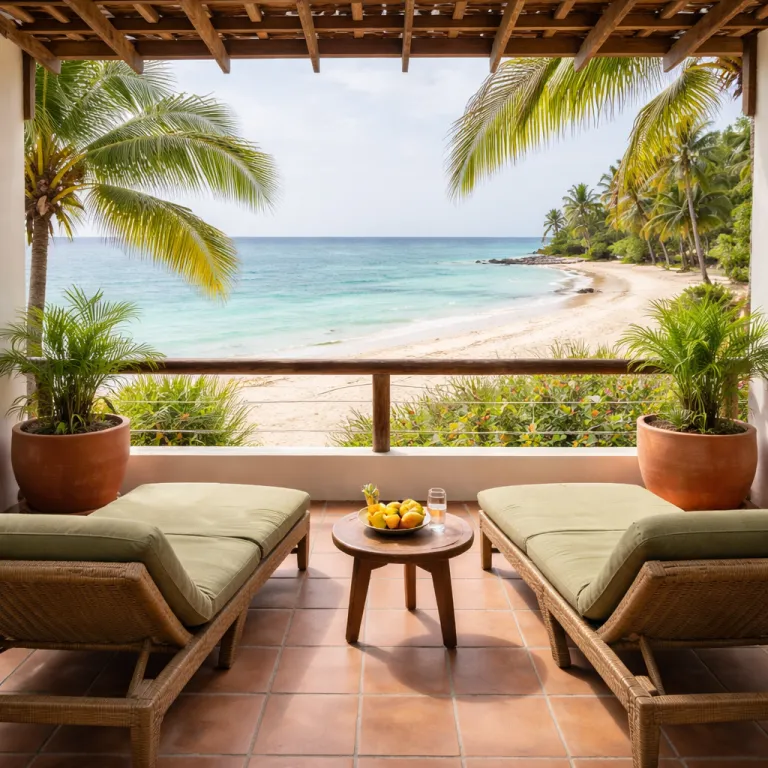
What travelers really mean by “hotel Caribbean”
Typing “hotel Caribbean” rarely comes from pure cartography. It usually comes from a mood you are chasing for your trip to Panama: warm water, a beach hotel with palm trees, a pool that glows at dusk, and that easy, barefoot rhythm you associate with the Caribbean islands. The question is not only where to find it, but which version of it suits you.
In Panama, that Caribbean feeling splits in two. On one side, you have the urban traveler who wants a refined city hotel in the center of Panama City, then a quick hop to the Caribbean coast for a couple of nights by the bay. On the other, you have guests who want to land, transfer once, and stay in a full resort spa environment with room service, a fitness center, and everything on site. Both can be excellent choices, but they deliver very different stays.
Before you book anything that markets itself as “Caribbean style”, look beyond the star rating and the photos of the pool. Check the exact location in relation to the beach, the distance in kilometres to the nearest town, and whether there is practical parking if you are driving across the isthmus. A five star hotel on paper can feel isolated if you expected to stroll to restaurants in ten minutes, while a quieter three or four star property on a small island can feel like the best decision of your trip.
Panama’s Caribbean coast versus the wider Caribbean
Standing on the Cinta Costera in Panama City, watching ships queue for the Canal, you are roughly 80 km from Colón and the Caribbean Sea. That proximity tempts many travelers to compare Panama’s Caribbean coast directly with classic resort destinations such as Punta Cana, Montego Bay, Ocho Rios, Cap Cana, Puerto Plata or even Santo Domingo. The comparison is useful, but only if you know what you are trading.
Panama’s Caribbean side is less about long strips of identical beach resorts and more about smaller bays, mangroves, and islands scattered off the coast. You will not find endless lines of all-inclusive hotels Caribbean style along one single beach. Instead, you might stay on an island reached by boat from Almirante, or in a low-rise property a short minute walk from a quiet village pier. The atmosphere is softer, more low-key, and often more nature focused.
If you are used to the polished resort infrastructure of the Dominican Republic or Jamaica, where a beach resort can feel like a self-contained town with several pools, a large fitness center and multiple classes of restaurants, Panama’s Caribbean may feel more intimate. That intimacy is the point. You trade some of the large-scale entertainment for closer contact with the sea, smaller guest numbers, and easier access to local life. For many, that is exactly what makes it the best choice.
How to read star ratings, class and “Caribbean” promises
Star ratings in the Caribbean region, whether in Panama or on neighbouring islands, tell only part of the story. A four star hotel on a small island bay can feel more luxurious than a five star hotel in a busy center if the service is attentive and the setting is exceptional. Class, in the hospitality sense, is often visible in the details: how staff handle early arrivals, how quickly room service appears, how the pool area is maintained between tropical downpours.
When a property in Panama describes itself as Caribbean style, look at how that promise translates into the physical space. Is the beach actually swimmable, or is it a rocky shoreline by a port? Is the pool large enough for laps, or mainly decorative? Are there quiet, private corners where you can read, or is the design focused on loud music and group activities? These elements matter more than a half point difference in rating.
Also pay attention to scale. A smaller hotel with fewer rooms can feel closer to what many travelers imagine when they think of the best hotels Caribbean wide: staff who recognise you by the second day, a bar where you quickly know the regulars, and a sense that the place belongs to its island rather than to a generic chain. Larger resorts can be ideal if you want a full program of activities, multiple pools, and a clear separation between family and adults-only zones. Decide which rhythm fits your trip before you compare reviews hotel by hotel.
Location, access and the reality of “steps from the beach”
On a map, the Caribbean Sea can look deceptively close. In practice, the difference between a hotel on the actual beach and one “near the bay” can mean a 20 minute walk along a busy road, or a short boat ride from the mainland to an island. When you evaluate any hotel Caribbean option for a Panama itinerary, zoom in until you can see the exact access to the water and to the town center.
In Bocas del Toro, for example, a property on Isla Colón along Avenida G can be a genuine beach hotel, with sand and sea directly in front, while another only 500 m inland may face the mangrove or a residential street. Both can be excellent, but they suit different guests. One is for those who want to step from room to beach in under a minute; the other is for travelers who prefer a quieter base and do not mind a short walk.
Parking is another practical detail that shapes your stay. On the Caribbean side of Panama, many coastal towns have narrow streets and limited formal parking areas. If you plan to drive from Panama City to the coast, check whether the hotel offers secure parking on site or at least a designated area nearby. A center free of cars can be charming for evening strolls, but it also means you may need to leave your vehicle a few hundred metres away and transfer luggage by hand or by small cart. For some, that is part of the charm; for others, it is a deal-breaker.
Facilities that matter: pool, fitness, spa and privacy
Under a Caribbean sun, the pool is not a decorative extra. It is often the social heart of the property. In Panama’s coastal hotels, look at the shape and orientation of the pool: does it catch the afternoon light, or is it shaded by the building by 15.00? Is there a shallow area for children separated from the main lane, or is it one uniform depth that suits adults only? These details rarely appear in marketing copy, yet they define how you will actually use the space.
A fitness center can be a deciding factor for longer stays. Some hotels offer a compact room with a few machines, others a fully equipped space with free weights and views over the bay or the island. If staying active is part of your routine, verify whether the gym is a real facility or simply a converted storage room. The same applies to any advertised resort spa: in some properties it means a full menu of treatments and dedicated therapists, in others a single massage room off the main corridor.
Privacy is where many travelers misjudge their choice. A room described as private may still face the main pool or a busy path to the beach. If seclusion matters, look for rooms set back from the center of activity, perhaps on a higher floor or at the far end of the garden. In smaller Caribbean islands off Panama’s coast, a handful of rooms may have genuinely secluded terraces where you can watch the water without seeing anyone else. Those are the rooms that tend to feel like the best kept secrets, even in otherwise lively hotels Caribbean wide.
How to use reviews without letting them choose for you
Scrolling through reviews hotel by hotel can be hypnotic. It can also be misleading if you do not filter them through your own priorities. A guest who complains that a beach resort is “too quiet at night” might be describing exactly what you are looking for. Another who praises constant entertainment by the pool may be signalling that this is not the place for a peaceful reading holiday.
When you compare options for a hotel Caribbean style stay around Panama, read reviews in clusters. Focus on patterns rather than isolated comments. If several guests mention that the beach is smaller than expected but the service is exceptional, you know you are trading space for attention. If many highlight that the hotel is a 15 minute walk from the center but very calm at night, you can decide whether that distance in minutes and in metres fits your habits.
Also, remember that comparisons with other destinations such as Punta Cana, Montego Bay, Ocho Rios, Cap Cana or Puerto Plata often reflect personal benchmarks. Someone who has only stayed in very large all-inclusive resorts may judge a smaller Panamanian property harshly on variety of restaurants, while another traveler values the direct connection to the island and the bay more than the number of buffets. Use reviews as raw material, not as a verdict.
Who a Caribbean-style Panama stay suits best
Not every traveler needs the same Caribbean. Some want a classic beach resort with structured days, multiple pools, and a clear sense of being in a self-contained world. Others prefer a low-rise hotel on a small island, where the main decision of the day is whether to swim before or after lunch. Panama’s Caribbean coast can accommodate both profiles, but not always in the same place.
If you are planning a first trip to Panama and want to combine city and sea, consider splitting your stay. A few nights in a refined hotel in the center of Panama City, then a transfer to the Caribbean side for three or four nights by the water, gives you both urban energy and island calm. The contrast between the skyline along Avenida Balboa and the wooden houses on Caribbean islands is part of the country’s appeal.
For repeat visitors or those who already know destinations like Santo Domingo or Punta Cana, Panama’s Caribbean is often about nuance. Less spectacle, more texture. You come for the particular shade of the water in a sheltered bay, for the way the light falls on the pool at 17.30, for the quiet of a private terrace when the rest of the hotel is at dinner. If those are the details that matter to you, a carefully chosen hotel Caribbean style stay in Panama will feel not just good, but exactly right.
What should I check first when choosing a Caribbean-style hotel for Panama?
Start with the exact location and access to the sea. Confirm whether the hotel sits directly on a swimmable beach or on a bay with limited entry points, then look at distance to the nearest town center in minutes on foot. Only after that should you compare star ratings, facilities such as pool, fitness center or spa, and the general atmosphere described in recent guest feedback.
Is Panama’s Caribbean coast a good alternative to places like Punta Cana or Montego Bay?
Panama’s Caribbean coast is an excellent alternative if you prefer smaller scale properties, more intimate bays and easier access to local life. It does not replicate the long strips of large all-inclusive resorts found in Punta Cana or Montego Bay, so it suits travelers who value atmosphere, nature and a sense of place over extensive entertainment programs.
How important is parking for a Caribbean hotel stay in Panama?
If you plan to drive from Panama City to the Caribbean side, parking is crucial. Many coastal towns have narrow streets and limited formal spaces, so a hotel with secure on-site parking or a clearly defined nearby area will make arrivals and departures far smoother. For travelers arriving by domestic flight or boat, parking is less relevant than pier access and transfer logistics.
Do I need a resort spa and full facilities for a short Caribbean break?
For a stay of two or three nights, a well-designed pool, comfortable room and reliable room service often matter more than a full resort spa or a large fitness center. Those extensive facilities become more valuable on longer trips, rainy-season stays or for guests who like structured wellness routines. Decide how many hours you realistically plan to spend on property before prioritising them.
Who will enjoy a small island hotel more than a large beach resort?
Travelers who value quiet, direct contact with the sea and a sense of being on a real island rather than in a resort complex tend to prefer smaller properties. These guests are usually comfortable with fewer restaurant options and limited nightlife in exchange for privacy, calmer pools and the feeling that the hotel belongs to its surroundings rather than to a generic resort model.