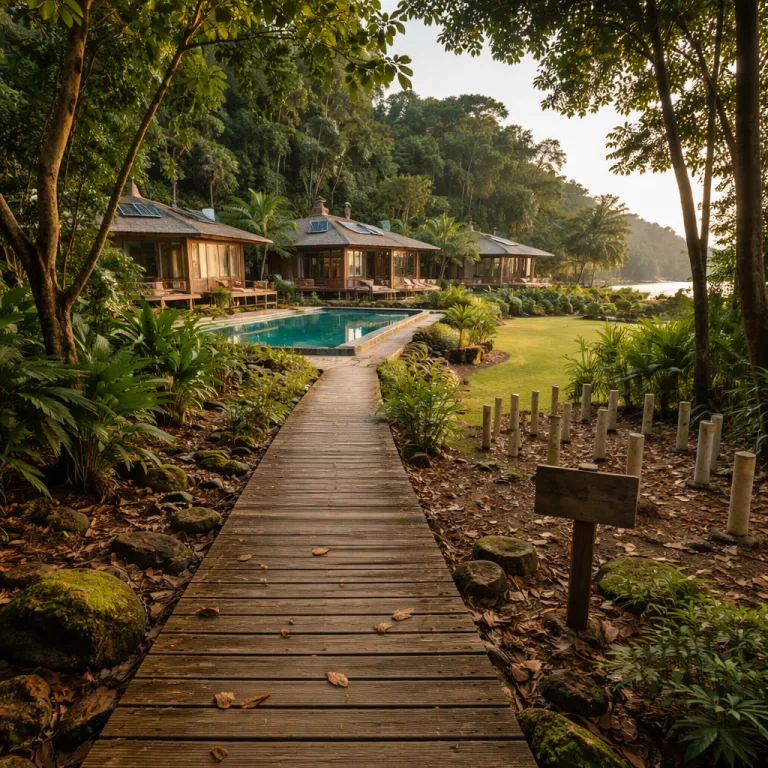
The eco label problem in Panama’s luxury scene
Panama sells itself as a shortcut to wild nature and easy ethics. Many resorts now add the word eco to their name, yet few publish basic figures on how they power the air conditioning, manage wastewater or pay the staff. In sustainable luxury Panama, the gap between marketing and measurable practice is where your due diligence must start.
Across the country, from a jungle lodge on the Pacific to an island resort in Bocas del Toro, properties talk about harmony with nature. Some highlight a private stretch of beach or a dramatic jungle view, but stay silent on water sourcing, sewage treatment and wage structures. When you plan travel in Panama or across Central America, the most responsible eco choices are rarely the loudest ones on Instagram.
Look closely at how any luxury property describes its operations. A serious eco resort in Panama will publish data on its energy mix in kilowatt hours, outline how it supports local communities and explain why its construction footprint on the island or in the jungle was kept low. If a Panama luxury resort listing leans heavily on vague eco friendly language and pretty beach photos, assume the sustainability is more theatrical than structural.
The pattern repeats in Panama City and beyond. Urban hotels promote themselves as Panama eco pioneers because they have removed plastic straws, while their electricity still comes from a carbon heavy grid and their food systems ignore local producers. In sustainable luxury Panama, the word eco should be earned through transparent reporting, not granted for a single recycling bin in a lobby.
Outside the capital, the same tension plays out on every private island and coastal lodge. An island resort in Bocas del Toro might call itself the best eco escape in Central America, yet run diesel generators all night and import most staff from abroad. When you explore Panama’s Caribbean and Pacific coasts, ask whether the resort or eco lodge has invested in solar, rainwater harvesting and long term training for local teams.
Even properties that sit deep in the jungle or on a remote isla can fall into greenwashing. A lodge that markets a wild nature experience but offers no information about its impact on wildlife corridors is not aligned with serious sustainable luxury Panama values. True eco resorts in Panama treat the surrounding forest, mangroves and beach as a living system, not just a backdrop for luxury.
Three questions that expose real sustainability in Panama
When you evaluate sustainable luxury Panama options, start with three blunt questions. Ask any resort how much of its energy comes from renewables, how it manages water and waste, and what percentage of staff and suppliers are genuinely local. The way a property answers will tell you more than any glossy eco friendly brochure.
Energy: a credible eco resort in Panama will share a clear figure, such as the percentage of electricity from solar or the annual kilowatt hours generated on site. Some island resorts now operate fully on solar, while others like Morillo Beach Eco Resort publicly plan to reach one hundred percent solar power in the near future and describe the panels and battery systems they are installing. If a representative cannot explain their energy mix beyond saying they are eco conscious, you are probably looking at marketing rather than measurable action.
Water and waste: a serious jungle lodge or adventure lodge will describe rainwater harvesting, on site treatment and strict limits on greywater discharge into nearby rivers or the sea. In Bocas del Toro or around Isla Palenque, where fragile marine ecosystems sit just off the beach, the best eco properties invest heavily in these systems because they understand that nature is their core asset.
People and sourcing: the third question is about people. Ask what proportion of employees are from local communities and how the property supports long term skills, not just seasonal jobs for guests’ high season needs. A resort that integrates with nearby villages, buys from a local chocolate farm or fishermen and works with community tourism networks sends a stronger sustainability signal than one that simply plants trees on its private land.
For a deeper benchmark, compare answers across several eco resorts in Panama and neighboring Costa Rica. Some operators, such as La Loma with its jungle lodge and chocolate farm model, have spent years refining low impact systems and community partnerships. Others in Panama City or on a private island speak about eco values but outsource most services, leaving little economic benefit in the region.
If you want a curated overview of properties that at least attempt to answer these questions, use a specialist guide to luxury eco resorts in Panama rather than generic booking engines. A resource like this round up of sustainable comfort and memorable experiences can help you compare how different resorts across Panama talk about energy, water and community. Then you can follow up directly with each property to test whether the rhetoric holds under scrutiny.
Where the evidence is stronger: from Islas Secas to Morillo
Among the noise of sustainable luxury Panama marketing, a few names back their claims with verifiable data. Islas Secas, a cluster of fourteen private islands in the Gulf of Chiriquí, reports that it operates fully on solar power and limits guest numbers to protect marine life, according to its published sustainability overview. That combination of private island seclusion, strict carrying capacity and transparent infrastructure puts it in a different category from many island resorts that simply reuse towels.
Morillo Beach Eco Resort on the Pacific coast is another case worth watching. The owners have publicly committed to becoming one hundred percent solar powered and already blend rustic lodge aesthetics with careful resource management, sharing progress updates in their own materials. When a Panama eco resort operator publishes a timeline and technical details for its transition, you can hold them accountable in a way that vague eco friendly promises never allow.
Other players in Panama’s eco luxury space show how varied serious practice can look. Dolphin Blue Paradise runs off grid with a strong focus on personalized service, while Six Pillars Resort pairs overwater bungalows with farm to table dining that leans on local producers. Casa Lajagua and Ciel y Miel use sustainable architecture and low impact design to reduce energy demand before any solar panel is installed.
In Bocas del Toro, Oasis Bluff Beach and La Loma demonstrate two different but complementary models. One leans into oceanfront views and off grid systems, the other into a jungle lodge and chocolate farm that anchors guests in the local food chain. When you compare these properties with more conventional resorts in Panama, the difference lies less in the word eco and more in how every operational decision reflects that commitment.
Community integration is the quieter but often more decisive test. Networks such as SOSTUR connect travelers directly with community tourism projects, showing that social sustainability can be as important as solar panels. A resort that builds long term relationships with local guides, artisans and farmers is usually a safer bet than a private island enclave that imports everything but the scenery.
If you want to go deeper into how booking platforms evaluate these claims, look at analyses of sustainable luxury and premium hotel booking websites in Panama. A resource like this overview of eco friendly booking trends explains how serious curators separate marketing from measurable impact. Used alongside your own questions, it can help you filter the best eco options from a crowded field.
How to book with a conscience: our verdict on Panama’s eco luxury
For a solo traveler navigating sustainable luxury Panama, the most powerful tool is selective booking. Choose properties that treat eco as an operating system, not a decorative adjective, and you will reward the right kind of innovation. A resort that publishes its data, supports local communities and limits its footprint on the beach or in the jungle deserves your money more than a louder but less transparent competitor.
On our radar, several names consistently align with this standard. La Loma’s jungle lodge and chocolate farm model, Dolphin Blue Paradise’s off grid approach and Ciel y Miel’s blend of jungle and beachfront relaxation all show how eco lodge design can coexist with real comfort. Tranquilo Bay, profiled in this in depth review of an eco adventure lodge, illustrates how a small island resort in Bocas del Toro can balance wildlife conservation with attentive service.
We also look favorably on operators that treat Panama as part of a wider Central America ecosystem. Properties that collaborate with conservation groups across borders, share best practices with peers in Costa Rica and engage with networks like SOSTUR tend to think beyond their own property line. Those that focus only on marketing a private slice of isla paradise, without acknowledging regional pressures, rarely deliver the best eco outcomes.
By contrast, we are wary of any resort in Panama that leans heavily on the word eco without answering basic questions. If a property in Panama City or Bocas del Toro cannot explain its energy mix, water systems or wage policies, we will not recommend it on mypanamastay.com. The same applies to a private island retreat that offers a flawless guest experience but leaves little trace of local employment or sourcing.
For travelers, the path forward is clear and empowering. Ask hard questions, favor smaller properties that integrate with local communities and treat every beach or jungle view as a privilege that comes with responsibilities. As one industry summary puts it, “A resort combining high end amenities with environmentally responsible practices” is what should define this segment, and “By providing employment, supporting local businesses, and preserving cultural heritage” eco resorts can justify their premium.
Prices will vary, and some eco resorts in Panama will charge more than conventional resorts nationwide. As summarized in one recent overview of sustainable travel in the region, “Prices vary; some may be higher due to sustainable practices, but offer unique value.” If you use that lens, sustainable luxury Panama stops being a slogan and becomes a set of concrete choices that shape the future of travel in this narrow but astonishingly diverse country.
Key figures shaping sustainable luxury stays in Panama
- Eco luxury bookings in Panama have been reported as growing by around 35 percent annually in recent years, according to data cited by DoPanama, showing that guest demand is rapidly shifting toward properties that combine comfort with measurable sustainability.
- Islas Secas operates a collection of fourteen private islands on full solar power, a scale of renewable energy use that sets a benchmark for any island resort in Central America claiming to be among the best eco options.
- Morillo Beach Eco Resort has publicly committed to reaching one hundred percent solar powered status, signaling a move from partial eco friendly gestures to a fully renewable energy model that guests can track over time.
- Across Panama, the rise of eco resorts and eco lodges has coincided with broader growth in sustainable tourism, as summarized by organizations such as National Geographic, which highlight networks like SOSTUR that channel more travel spending into local communities.