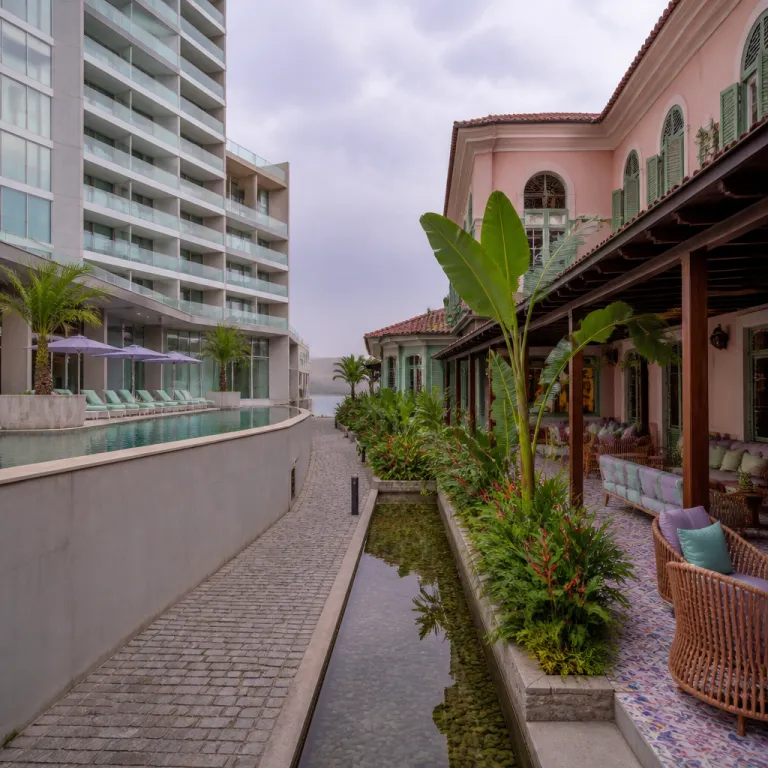
How luxury hotels in Panama differ from Panamanian luxury hotels
Luxury hotels in Panama can look similar at first glance, yet the difference in soul becomes clear once you settle in. In this guide, a luxury hotel in Panama refers to any high-end international property operating in the country, while a Panamanian luxury hotel is owned or led by Panamanian stakeholders who embed local culture into every layer of the experience. When you compare these places side by side, you start to see how ownership shapes design, service and the way the city or island around you is interpreted.
Across Central America and wider South America, global brands bring consistency, but in Panama the most interesting stays now feel unmistakably local. A standard upscale hotel in Panama City might offer a polished lobby, a large swimming pool and a familiar spa menu, yet the narrative often stops at canal views and generic Latin music. A Panamanian-run luxury property, by contrast, tends to weave in indigenous craft, local wildlife knowledge and seasonal ingredients, turning a simple poolside drink into a short course in the country’s tropical ecosystems.
According to Panama’s tourism authority (ATP) accommodation registry and estimates shared by the Panama Hotel Association in 2023, there are on the order of 50 high-end hotels nationwide, and roughly 40 percent of these luxury properties are owned by Panamanian entities. That split between international and domestic ownership helps explain why some hotels Panama wide feel like they could be in any city in the Americas, while others could only exist in this narrow isthmus between two oceans. Understanding this difference helps you choose whether you want a safe, familiar resort experience or a deeper connection with the land, the Gulf of Chiriquí, the islands and the people who call Panama home.
Panama City, Casco Viejo and the new language of urban luxury
Panama City is where the contrast between a luxury hotel in Panama and a Panamanian luxury hotel is most visible. In the glass towers of city Panama, international collection hotels deliver the expected script of marble, club lounges and rooftop pools, while the historic quarter of Casco Viejo quietly rewrites what luxury Panama can mean. Here, the best hotels use restored stone, canal-aware architecture and local artisans to translate a UNESCO-listed district into a living, breathing neighborhood stay.
Sofitel Legend Casco Viejo is a prime example of an international luxury collection that has listened carefully to its setting. The property occupies restored colonial buildings along the waterfront, turning the old sea wall into terraces where you can explore the skyline of Panama City while still feeling anchored in viejo Panama. Service is polished in a classic French way, yet the hotel’s restaurants lean into fine Panamanian ingredients, from coffee grown in Chiriquí to seafood caught near the Gulf of Chiriquí and served beside the pool. In interviews with local media in 2023, members of the culinary team described their approach as “French technique, Panamanian pantry,” a phrase that neatly captures this blend of global and local.
Just a few streets away, Panamanian luxury hotels in Casco Viejo often feel more intimate and more opinionated about place. They commission mola-inspired textiles, use tagua nut details in headboards and train their équipe to talk about the city’s layered history, from the original viejo Panama ruins to the present-day creative scene. One Casco Viejo concierge quoted in a 2022 neighborhood profile described their role as “part guide, part neighbor,” reflecting how staff often live in the same streets they recommend. If you are planning urban travel focused on culture, consider pairing a night at a global name like Sofitel Legend with a stay in a Panamanian-owned property, then extend your journey into the countryside with a valley retreat such as Hotel La Compañía del Valle in El Valle de Antón or a future opening like Casa Simona, both designed to connect architecture, gardens and volcanic landscapes in a way that feels rooted rather than imported.
From canal to cloud forest: where authenticity changes your stay
Leaving the capital, the difference between a luxury hotel in Panama and a Panamanian luxury hotel becomes even more pronounced. Along the Pacific coast and into the highlands, you will find large international resorts that could sit anywhere in Central America, with similar room layouts, similar buffet spreads and similar pool complexes. Then, often just a short drive away, a Panamanian-owned retreat will use volcanic stone, local wood and regional recipes to create an experience that feels inseparable from its landscape.
In El Valle de Antón, Hotel La Compañía del Valle under the Hyatt Unbound Collection label shows how a global flag can still host a deeply local story. The property offers around 70 rooms, a sculpture park with more than 200 pieces and Chef Patrice Jaumon’s modern Panamanian cuisine across three element-themed restaurants, which turns a standard resort dinner into a curated tasting of the country’s terroirs. According to early project descriptions shared with Panamanian hospitality media in 2023, the culinary team aims to source a majority of produce from within a short radius of the valley, reflecting a broader farm-to-table trend in Panamanian luxury hospitality. When Casa Simona, a member of Small Luxury Hotels, opens nearby, it will further strengthen this corridor of collection hotels that treat the valley’s cloud forest, wildlife and cool climate as the main luxury, not just the backdrop.
For coastal travel, the same pattern appears from the Azuero Peninsula to the Gulf of Chiriquí and beyond. Some resorts focus on generic beach club energy, while Panamanian luxury hotels frame the Pacific as a working ocean, connecting guests with fishing communities, humpback whales season and mangrove conservation. Many of these properties now publish basic sustainability metrics, such as percentage of renewable energy use or reductions in single-use plastics, to show how their environmental commitments translate into daily operations. If you want a deeper narrative that goes beyond the canal, look for properties highlighted in guides to Panama beyond the canal, where the emphasis falls on inland valleys, coastal wetlands and the people who interpret them for guests.
Islands, wildlife and the rise of the private Panamanian retreat
On the islands scattered along both coasts, the contrast between a luxury hotel in Panama and a Panamanian luxury hotel often comes down to how the sea and wildlife are handled. International resorts on a private island may focus on overwater villas, an infinity pool and a long cocktail list, yet treat the surrounding tropical forest and coral as scenery rather than a shared responsibility. Panamanian luxury hotels on the same island chains tend to limit room counts, work with local guides and design excursions that respect turtle nesting beaches, reef health and the rhythms of coastal communities.
The Gulf of Chiriquí on the Pacific side is a case study in this shift from generic luxury to place-based luxury Panama. Here, you can stay at a resort that offers whale watching as a simple add-on, or you can choose a Panamanian-owned property that times its season around humpback whales migration, trains its équipe in marine biology basics and invests in low-impact boats. Some operators report using engines that cut fuel consumption by double-digit percentages compared with older models, according to internal sustainability reports shared with regional travel journalists in 2022, a small but concrete example of how environmental goals show up on the water. The latter approach turns a standard wildlife excursion into a layered experience, where you learn how these giants move through South America’s Pacific corridor and why Panama’s marine parks matter for the entire region.
In the Caribbean archipelagos, new projects are pushing the idea of a private island retreat even further. Some international brands are building overwater villas that echo the Maldives, while Panamanian luxury hotels and eco-focused resorts are experimenting with solar power, rainwater systems and locally sourced materials. Industry coverage of high-end overwater developments in Bocas del Toro, including a detailed look at a Maldives style overwater resort in Panama, shows how design choices can either echo global templates or respond to Caribbean mangroves and indigenous cultures. In several cases, developers have publicly committed to protecting surrounding mangrove areas and monitoring coral health, adding measurable conservation goals to the usual list of luxury amenities.
How to identify genuine Panamanian luxury when you book
When you scroll through luxury hotels Panama listings, the photos can blur into one long reel of pools, sunsets and white linens. To separate a standard luxury hotel in Panama from a Panamanian luxury hotel, start by checking ownership and leadership, because this often predicts how deeply the property engages with local culture. Industry associations estimate that around 40 percent of the country’s luxury hotels are owned by Panamanian entities, and these Panamanian luxury hotels are usually more invested in long-term community relationships and environmental stewardship.
Look closely at design details in the photos and descriptions. Panamanian luxury hotels tend to feature indigenous craft, such as Guna Yala mola textiles, Emberá basketry or carved tagua nut accents, while a generic resort might rely on anonymous décor that could belong to any city in the Americas. In food and beverage, a Panamanian luxury hotel will highlight coffee from Boquete, cacao from Bocas del Toro and seafood from the Gulf of Chiriquí, often with tasting notes and stories, whereas a standard hotel may simply list “catch of the day” without context.
Service language is another reliable indicator when you compare hotels Panama wide. A Panamanian luxury hotel will train its équipe to talk about Casco Viejo as a living neighborhood, explain the history of viejo Panama and guide you toward less obvious experiences, from rainforest hikes within an hour of Panama City to artisan workshops in the interior. International brands such as Waldorf Astoria and other luxury collection hotels can absolutely deliver this depth, but you need to read reviews carefully and look for mentions of local storytelling, wildlife interpretation and meaningful cultural programming rather than just spa treatments and a large swimming pool.
Chains, icons and the future of luxury hotels in Panama
International brands still play a major role in the landscape of luxury hotels in Panama, especially in Panama City and key resort corridors. A luxury hotel in Panama under a global flag, such as Waldorf Astoria, brings predictable standards, extensive loyalty programs and a familiar language of club floors, fine dining and concierge services. For many travelers, especially on short business trips, that reliability in the city is the priority, and cultural immersion can wait for a future vacation.
Yet the fastest growing segment in the country is the Panamanian luxury hotel that blends high-end comfort with a strong sense of place. The Santa Maria in Panama City, for example, has earned a Forbes Travel Guide Recommended rating and a Responsible Hospitality Verified certification, according to public listings from those programs consulted in 2023, signaling that environmental and social practices now sit alongside thread count in the definition of luxury Panama. Across Central America, this shift toward responsibility and authenticity is reshaping what counts as the best resort experience, and Panama is at the forefront thanks to its canal economy, compact geography and rich biodiversity.
As you plan travel that might combine Panama with neighboring Costa Rica or other parts of South America, think of the country as a laboratory for new forms of luxury. You can stay in a trade hotel near the financial district one night, then move to a Panamanian-owned retreat in the mountains or on an island the next, comparing how each property interprets the same national story. Over time, the most compelling collection hotels and independent Panamanian luxury hotels are likely to be those that treat the canal, the rainforest and the coasts not just as views from the pool, but as living systems that shape every guest experience.
Key figures and trends in Panamanian luxury hospitality
- Public tourism data from the Autoridad de Turismo de Panamá (ATP) and industry reports as of 2023 point to around 50 luxury hotels in Panama, a significant number for a country of this size in Central America, which gives travelers a wide range of city and island options.
- Approximately 40 percent of these luxury hotels are believed to be owned by Panamanian entities, according to estimates shared by the Panama Hotel Association and local analysts in recent conference presentations, meaning Panamanian luxury hotels now represent a substantial share of the high-end market.
- Casco Viejo has been described in regional travel media as one of Latin America’s trendiest urban tourism zones, which explains the rapid growth of both international luxury collection properties and Panamanian luxury hotels in the historic center.
- The Santa Maria’s Forbes Travel Guide Recommended rating and Responsible Hospitality Verified certification, both listed on the respective program websites in 2023, highlight how environmental and social criteria are becoming core to defining the best resort and city hotel experiences in Panama.
- New projects such as Hotel La Compañía del Valle and Casa Simona in El Valle de Antón show how sculpture parks, nature immersion and modern Panamanian cuisine are reshaping expectations for inland luxury resorts.
FAQ about luxury hotels in Panama and Panamanian luxury hotels
What defines a luxury hotel in Panama compared with a Panamanian luxury hotel ?
What defines a luxury hotel? High-end accommodations with premium services and amenities. A luxury hotel in Panama can be any such property operating in the country, often under an international brand, while a Panamanian luxury hotel is typically owned or led by Panamanian stakeholders and tends to integrate local culture, materials and stories more deeply into the guest experience.
How can I identify a Panamanian owned luxury hotel before booking ?
How can I identify a Panamanian-owned luxury hotel? Research hotel ownership through official registries or hotel websites, and be aware that figures can change as new projects open. You can also look for mentions of local ownership in press coverage, check whether the property partners with Panamanian chefs and artisans, and read guest reviews that highlight cultural programming, community engagement and staff knowledge of the country’s wildlife and history.
Why choose a Panamanian luxury hotel instead of an international chain ?
Why choose a Panamanian luxury hotel? For authentic cultural experiences and support of local businesses. These properties often provide richer storytelling about Casco Viejo, viejo Panama and inland regions, use Panamanian ingredients in fine dining, and design excursions that connect you with the Gulf of Chiriquí, humpback whales season and indigenous crafts in a more thoughtful way.
Are international brands like Waldorf Astoria or Sofitel Legend still good options in Panama City ?
International brands such as Waldorf Astoria and Sofitel Legend in Panama City remain excellent choices if you value consistency, loyalty benefits and classic urban luxury. To get a more Panamanian feel from these hotels, focus on their local partnerships, choose experiences that highlight the city’s UNESCO heritage areas and combine your stay with nights in smaller Panamanian luxury hotels elsewhere in the country.
How should I split my time between city hotels and island or inland resorts in Panama ?
A balanced itinerary often includes two or three nights in Panama City, ideally with at least one night in Casco Viejo, followed by several nights in an inland valley or on an island resort. This mix lets you compare a luxury hotel in Panama’s capital with a Panamanian luxury hotel in a more remote setting, where wildlife, tropical forests and coastal life become central to the overall experience.